
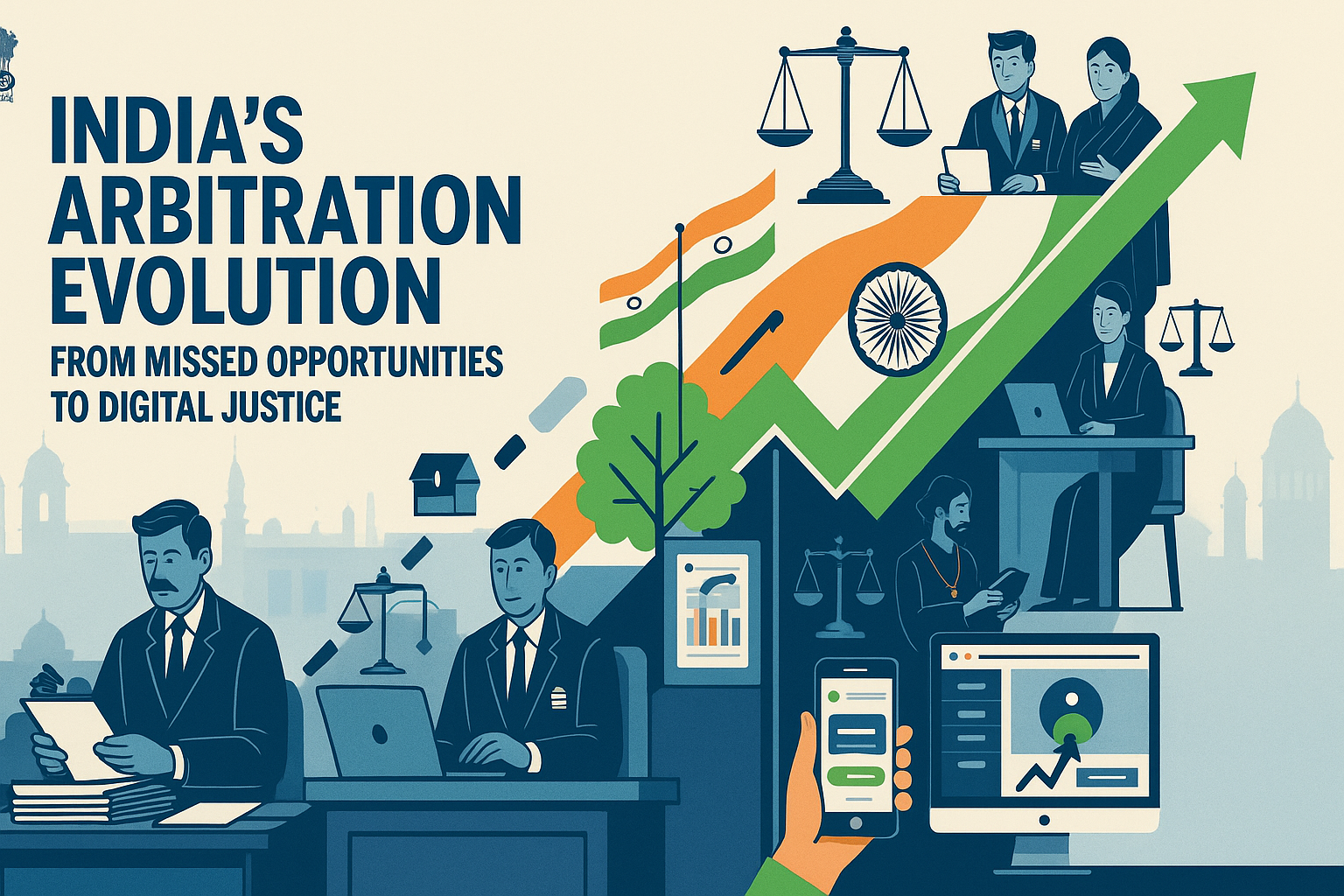
With almost 5 crore (50 million) cases pending across Indian courts, even a simple civil or commercial dispute can feel like a decade-long tunnel with no clear exit. Court litigation in India can drag on for 5 to 10 years or more, draining finances and energy. But there is a faster, smarter path: Online Dispute Resolution (ODR).
What Is ODR?
ODR is a fully virtual process for resolving disputes. It leverages video hearings, e-filing, and e-signatures to bring both parties together without the need for physical courtrooms. The outcomes are legally enforceable, equivalent to court decrees, giving businesses and individuals the certainty they need.
Court vs ODR: A Comparison
- Timeline: Court litigation takes 5–10+ years; ODR resolves disputes in weeks to months.
- Cost: Court proceedings involve heavy legal fees and overheads; ODR is significantly cheaper.
- Process: Courts require physical presence; ODR is fully virtual with video hearings.
- Enforceability: Both produce legally binding outcomes equivalent to court decrees.
- Accessibility: Courts are limited by geography; ODR is available from anywhere with an internet connection.
- Confidentiality: Court proceedings are typically public; ODR processes are private and confidential.
Why ODR Is the Future
For MSMEs, startups, and individuals who cannot afford years of litigation, ODR offers an accessible, time-sensitive alternative. With India’s growing digital infrastructure and policy support, ODR platforms like Sammat are making justice faster, fairer, and available to everyone.
Justice delayed is justice denied. ODR ensures it is neither.