
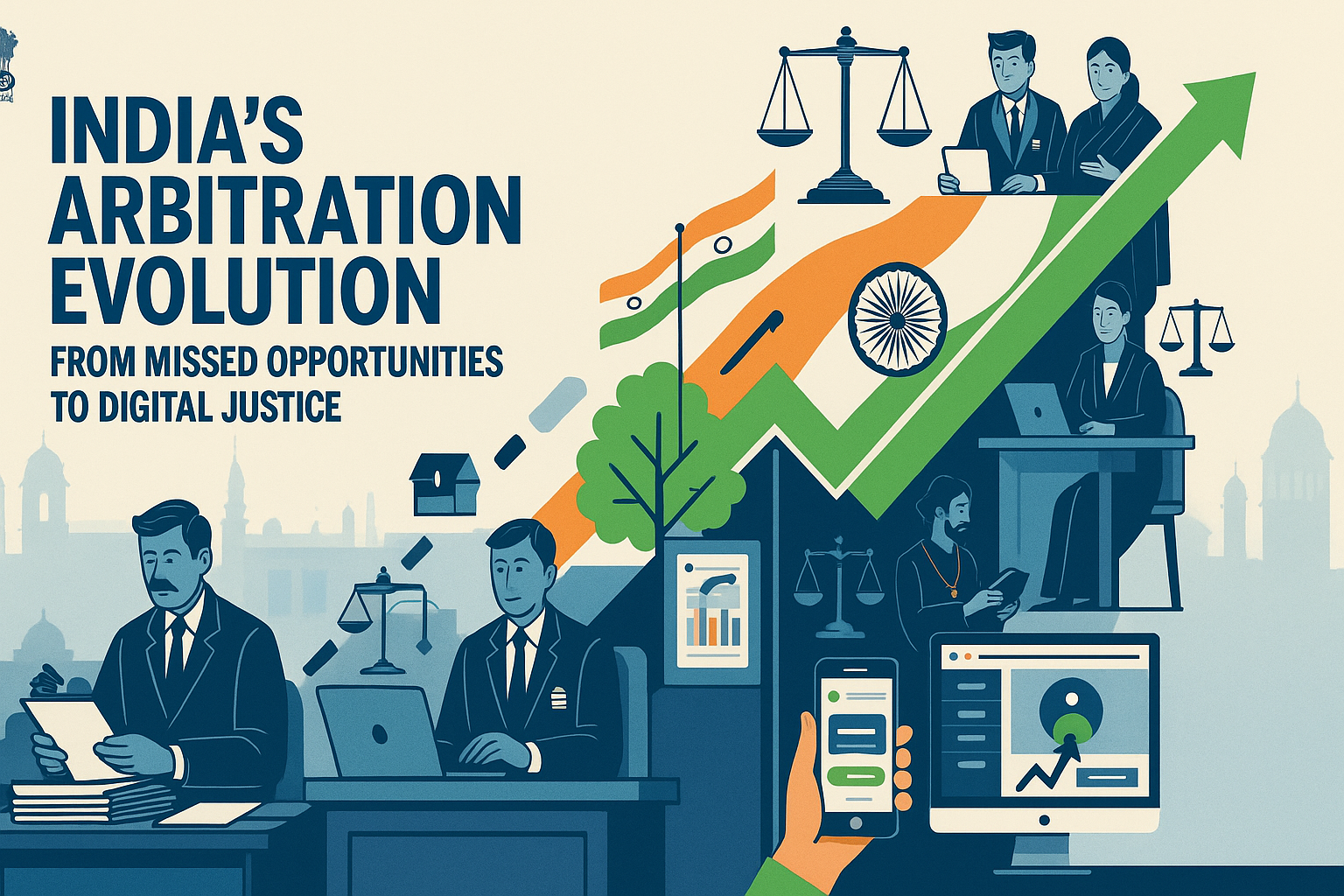
India’s justice system is standing at a crossroads. With crores of pending cases and an overburdened judiciary, Online Dispute Resolution (ODR) has moved from being a niche experiment to a serious candidate for the default front door to justice.
ODR for Low-Value, High-Volume Disputes
For low-value, high-volume disputes — think e-commerce returns, insurance claims, and small payment defaults — fully online processes are the most practical solution. These disputes are too small for court but too important to ignore. ODR handles them efficiently at scale.
MSME and B2B Disputes
For MSMEs and B2B disputes, online mediation and arbitration offer a way to resolve conflicts without disrupting business operations. The process is faster, cheaper, and preserves commercial relationships that adversarial litigation would destroy.
Court-Annexed ODR and e-Lok Adalats
The judiciary itself is embracing ODR. Court-annexed ODR programmes and e-Lok Adalats are bridging the gap between traditional courts and digital platforms, creating a hybrid model that leverages the best of both worlds.
Government and Policy Support
- Government is actively shaping ODR through policy frameworks and judicial support.
- NITI Aayog and the judiciary have endorsed ODR as a key pillar of access to justice.
- Private platforms like Sammat are partnering with institutions to scale ODR adoption.
- The goal: make ODR the first stop for every dispute before it reaches a courtroom.
ODR is not a replacement for courts — it is the front door that keeps most disputes from ever needing one.